
As part of a Nordplus project, an intensive week of shared making, cultural encounters and creative exploration brought students and teachers from Finland and the Baltic countries together in Joensuu. Through craft, co-design and collaborative experimentation, participants explored cultural heritage beyond stereotypes, combining traditional techniques with contemporary tools such as AI. The course demonstrated how making together can open dialogue, build connections across cultures, and transform diverse symbols and stories into meaningful, shared creations.
The intensive course focused on promoting cultural dialogue through craft and co-design.
Its main aims were to:
- promote cultural understanding by encouraging students to move beyond stereotypical views of national cultural heritage and to reflect on their own personal cultural heritage,
- enhance cultural dialogue by introducing different forms of cultural dialogue (cross-, multi-, inter- and transcultural) and their practical applications,
- foster collaborative design through co-design methods that combine cultural elements and support creativity and innovation, and
- explore how cultural heritage can be preserved, reinterpreted and transformed through selected textile craft techniques and materials.
Before the course, participants were asked to prepare a short presentation introducing themselves and a handmade craft item that was personally meaningful to them. Alternatively, the presentation could focus on a local craft tradition. The aim was to share personal connections to craft and cultural heritage and to establish a common ground for dialogue and collaboration from the very beginning of the course.
Before the course, participants were asked to prepare a short presentation introducing themselves and a handmade craft item that was personally meaningful to them. Alternatively, the presentation could focus on a local craft tradition. The aim was to share personal connections to craft and cultural heritage and to establish a common ground for dialogue and collaboration from the very beginning of the course.
An Intensive Week in Practice
Monday: Introduction and Orientation to Baltic Craft Cultures
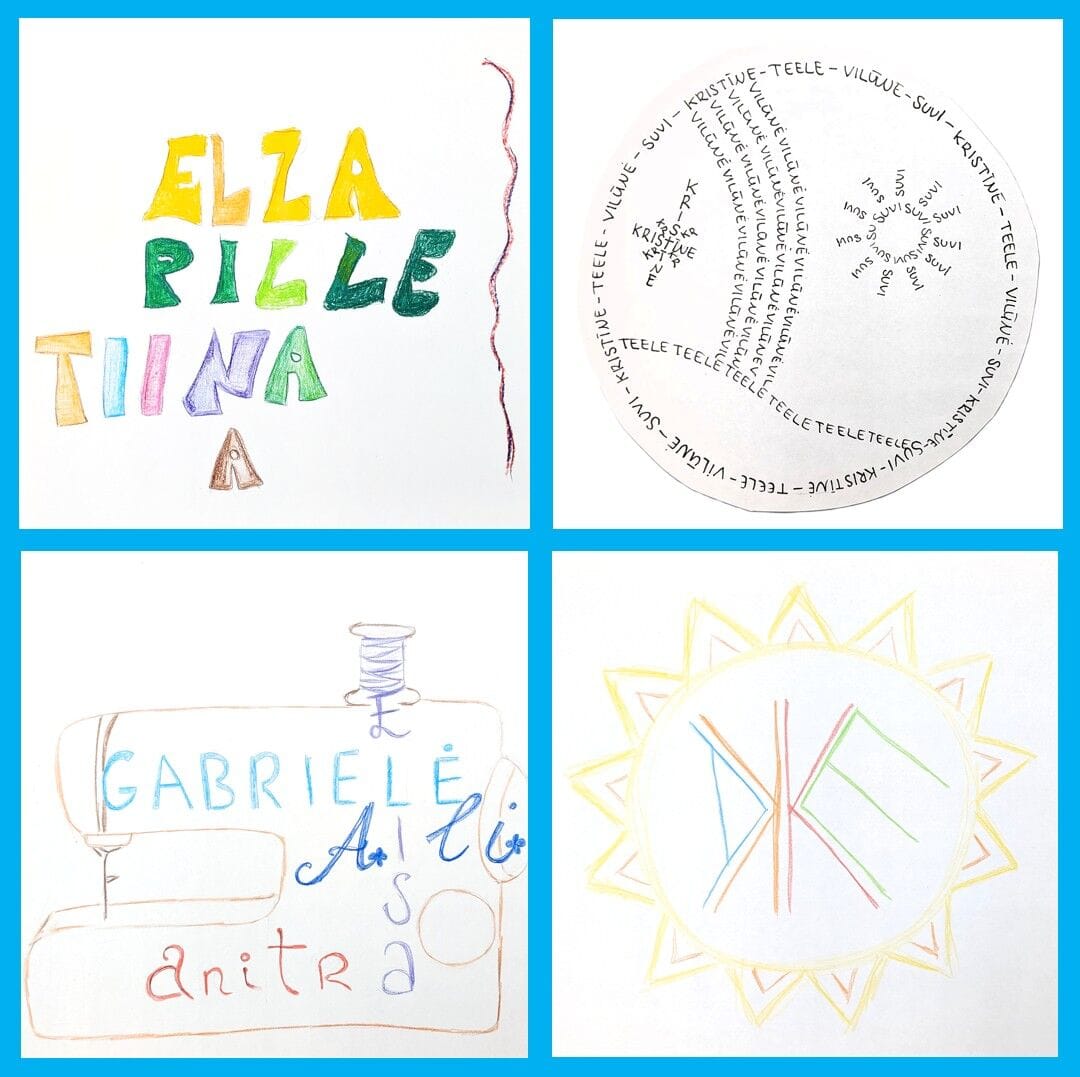
The intensive course began with an introduction to the background, objectives and overall structure of the course. This was followed by an icebreaker activity in which participants got to know each other by creating team name sheets.
In the afternoon, participants from Estonia, Lithuania and Latvia presented their pre-tasks, introducing examples of their national and personal craft heritage.
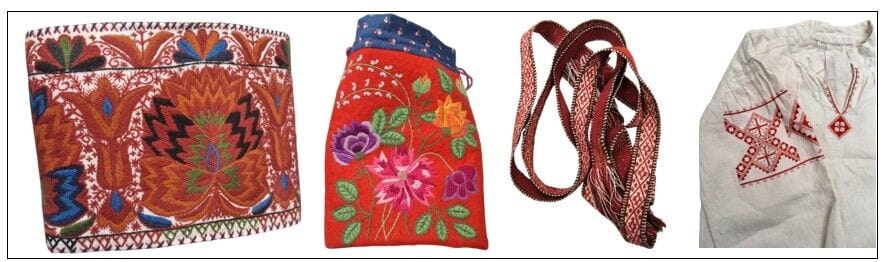
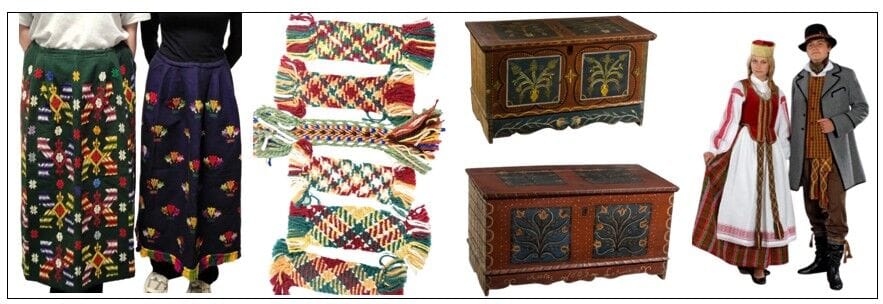
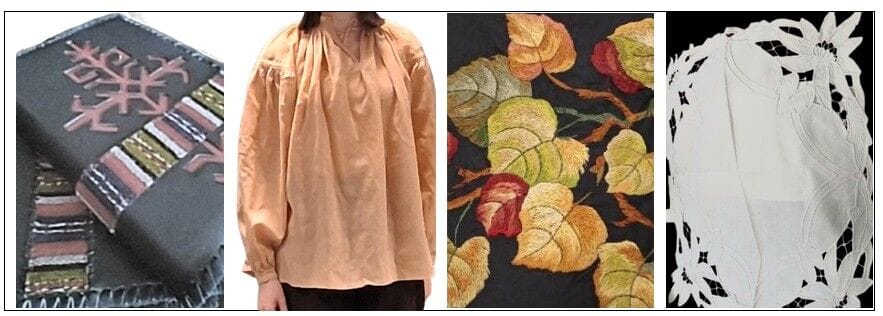
Tuesday: Exploring Finnish Cultural Heritage
The day started with an introduction to Taito Day, which coincided with the course schedule. Taito means “skill”. Skill Day is celebrated annually in Finland on April 14. It is a nationwide theme day that celebrates Finnish craftsmanship, skills, and creativity. Craft organisations organise events on Skill Day.
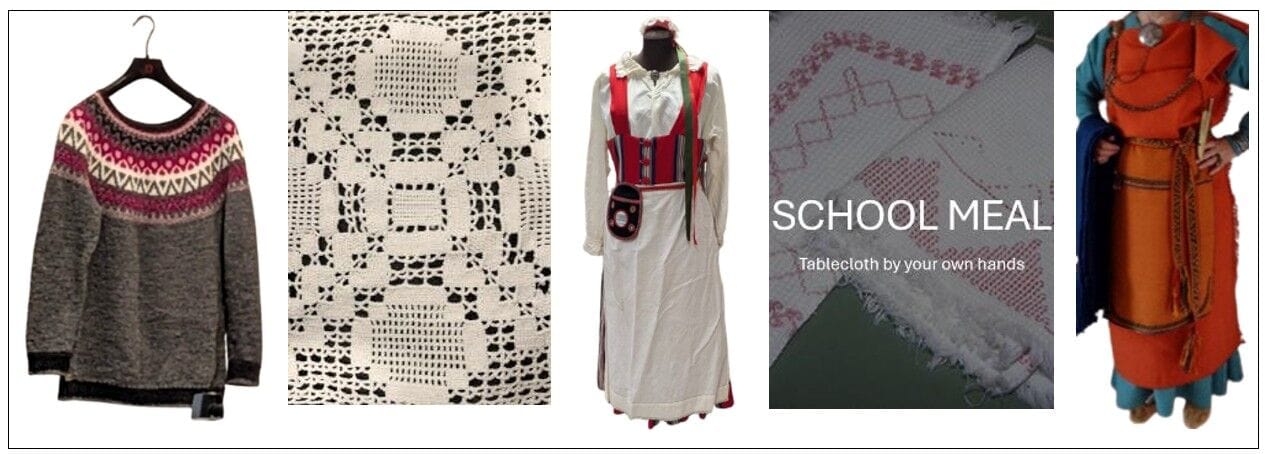
Finnish participants then presented their pre-tasks. The presentations included a waffle-embroidered school meal cloth, a knitted sweater, a crocheted bedspread, the Nastola–Asikkala national costume, and the ancient Finnish costume of Mikkeli.
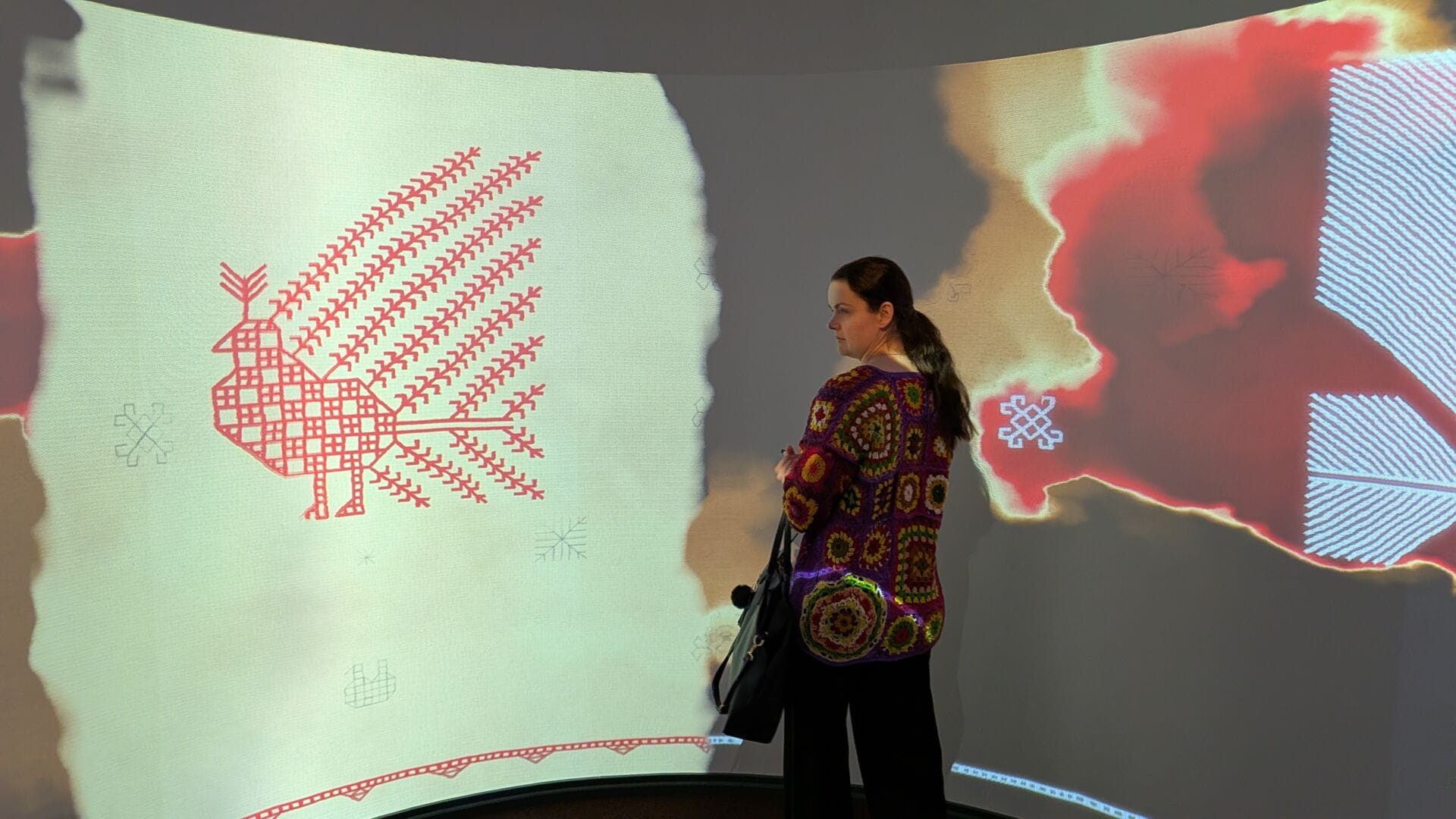
Later in the day, the group visited the local museum Eliel, where they received an introduction to Karelian craft traditions.
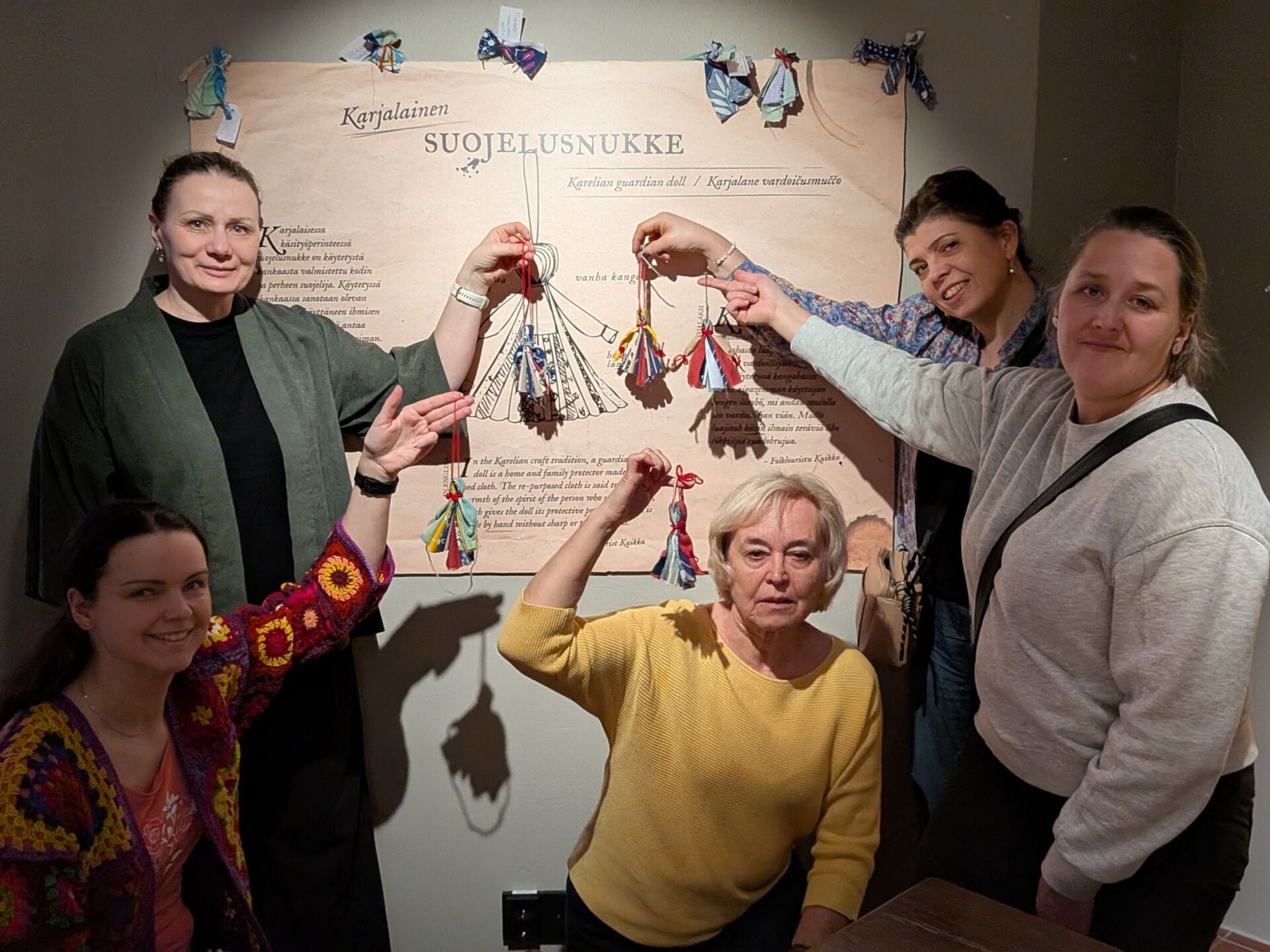
During the visit, participants made traditional Karelian guardian dolls. A guardian doll is a traditional protector of the home, the family, and all the household’s inhabitants. The doll was made from used fabrics—more information: https://punomo.fi/karelian-guardian-doll/.
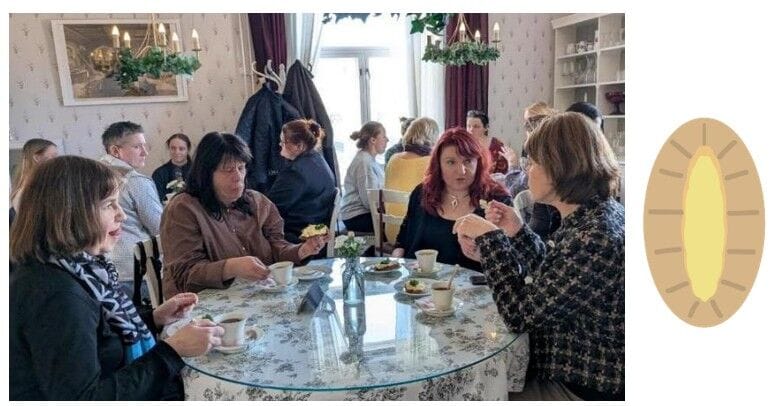
In the afternoon, participants visited Taitokortteli, first tasting traditional Karelian pies and then learning about Taitokortteli and the Taito Organization in Finland.
Wednesday: Co-Design
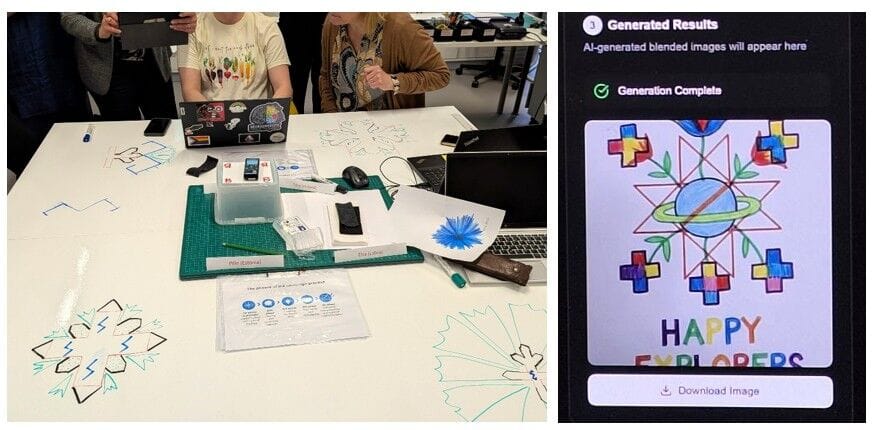
The day began with an introduction to co-design, covering its key concepts, tools and methods. In the co-design workshop, students first presented a symbol or ornament from their own cultural heritage to their team members. They then began blending their cultural symbols through collaborative design. The process included traditional chain drawing methods as well as AI-based image mixers to explore visual combinations of cultural elements.
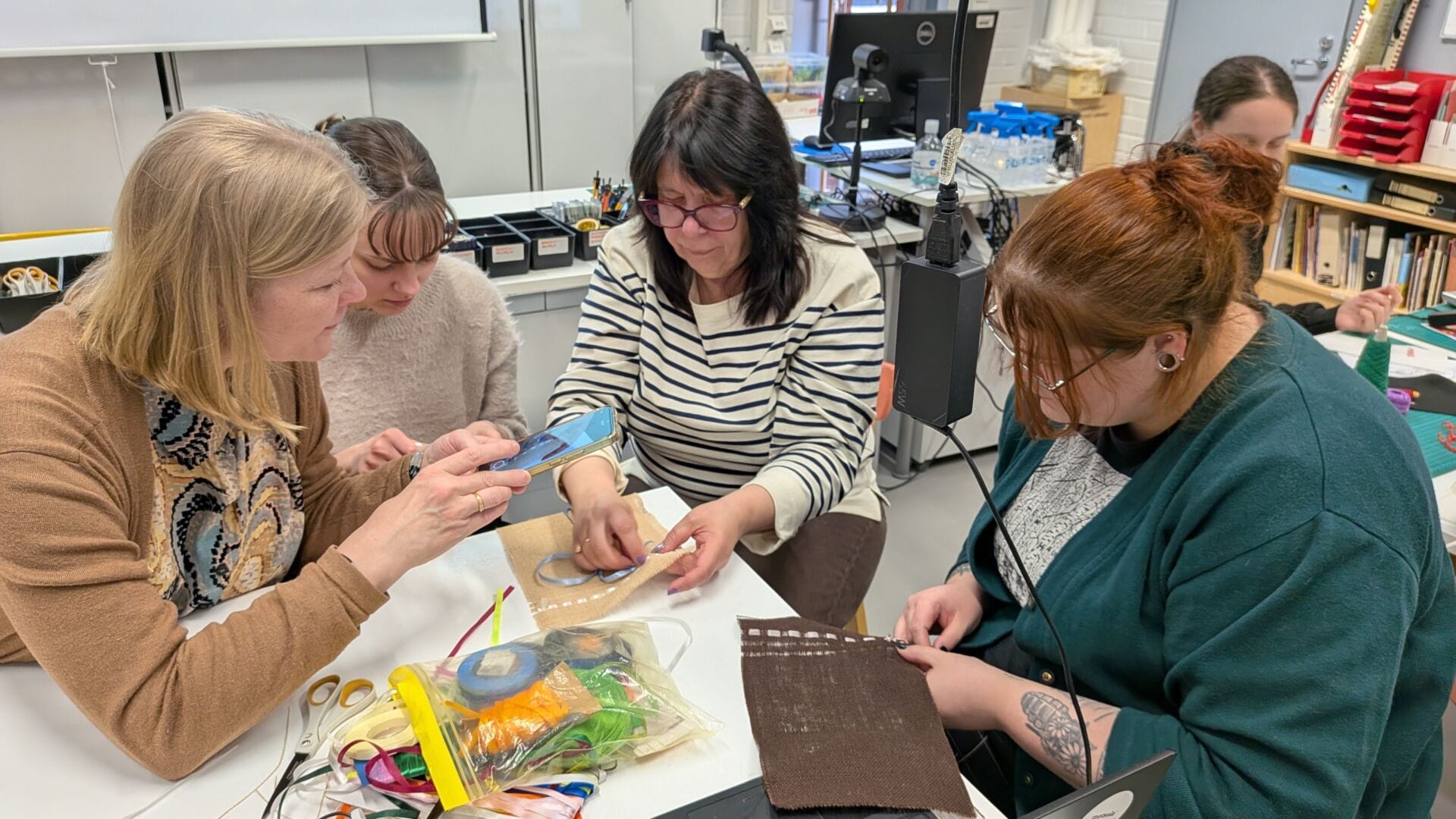
In the afternoon, participants attended practical presentations and demonstrations of embroidery techniques, materials, and tools. They then experimented with selected techniques to identify suitable approaches for their final co-designs.
The day concluded with a group dinner at the local restaurant Filipof. You can read the short history of Mr Filipoff’s building here: https://www.ravintolafilipof.fi/en/filipof-en/.
Thursday: Crafting
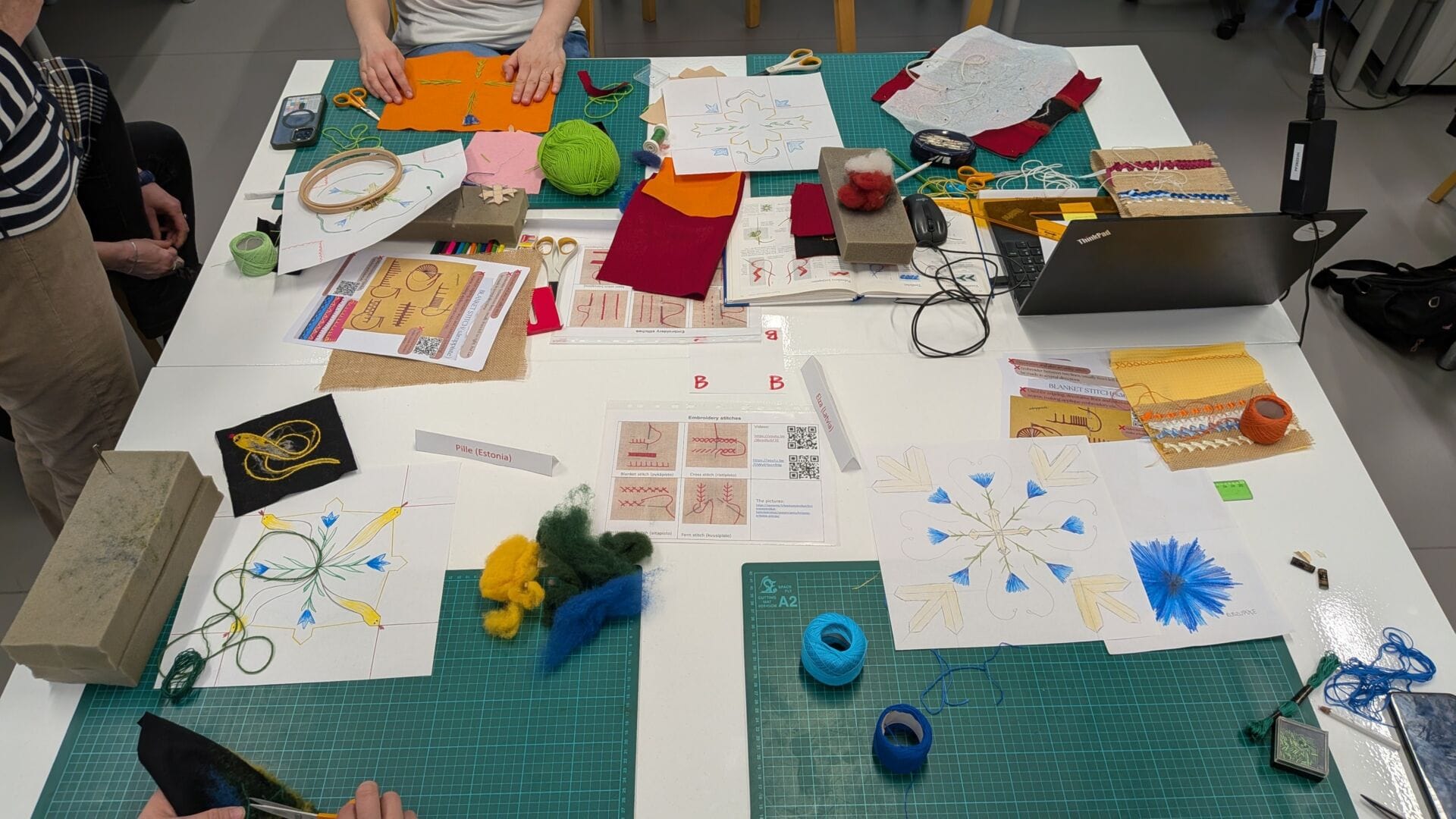
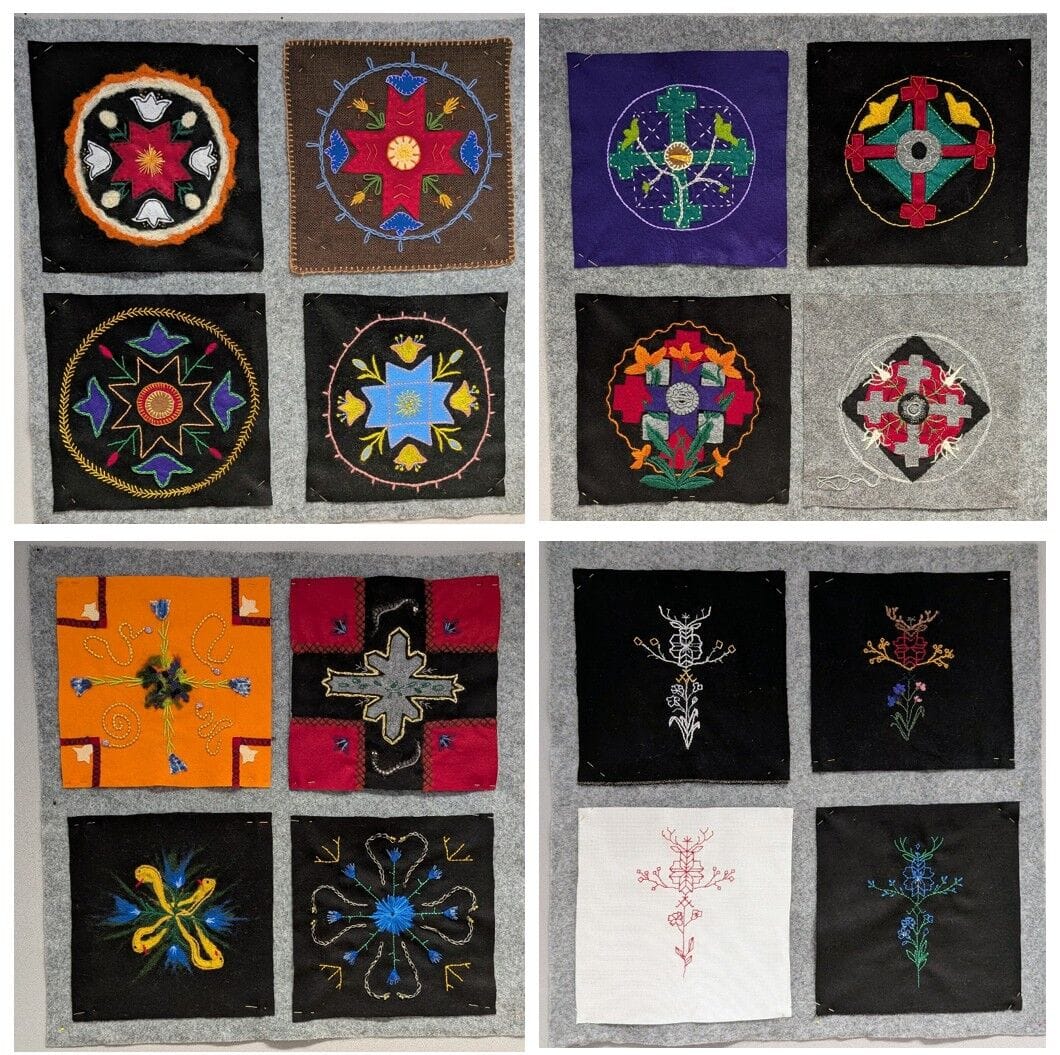
Students continued working in small teams to create embroidered patches based on their co-designs and previous experiments. The working atmosphere was enriched by listening to participants’ favourite music from their own cultures.
During the day, participants also attended a presentation of the East STEAM project by Karl Alu.
Friday: Presentation and Reflection
The morning was dedicated to finishing the embroidered patches and preparing team presentations. Teams then presented their completed work, described their collaborative processes, and explained the ideas behind their designs. Instructors and peers provided feedback.
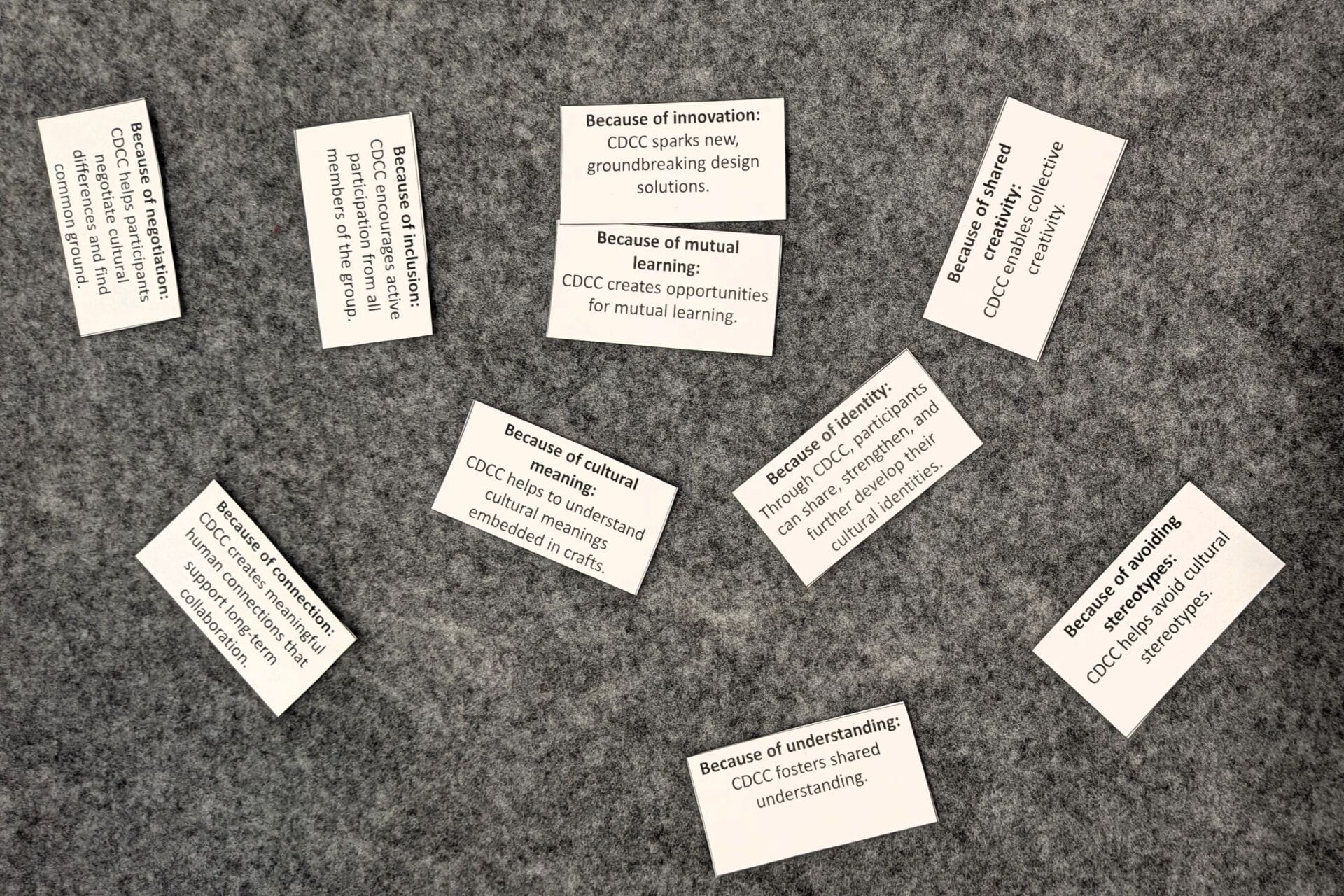
The final reflective task focused on the question: Why does Cultural Dialogue through Co-design and Crafting (CDCC) matter? Students discussed and organised their ideas collaboratively within their teams.
The course concluded with closing remarks. In the afternoon, students finalised their course essays, which they had been developing throughout the week. The essays included reflections on:
- learning about Estonian, Lithuanian, Latvian and Finnish craft cultures,
- the team’s co-design process and shared meanings, and
- the significance of cultural dialogue and personal learning experiences during the course.
Key experiences and learning outcomes
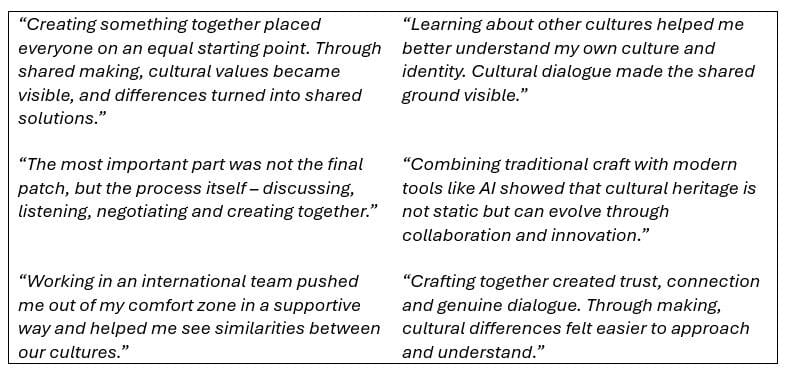
The reflections show that the most significant experiences of the intensive course emerged from working together across cultures through hands-on making. Creating and designing in international teams helped participants step out of their comfort zones, listen to different perspectives, and discover both cultural differences and shared meanings. Many students described how learning about other cultures also deepened their understanding of their own cultural identity.
Collaborative crafting, co-design methods and techniques such as chain drawing made cultural dialogue tangible and experiential rather than theoretical. The integration of traditional craft practices with modern tools, including AI, was experienced as both inspiring and thought-provoking, encouraging critical reflection on creativity, technology, and human decision-making.
Equally important were the human connections formed during the week. Open discussion, shared meals, music, museum visits and collective problem-solving strengthened a sense of trust, community and mutual respect. Overall, the course highlighted that cultural dialogue through co-design and crafting is most powerful when learning happens through doing, sharing, and creating something meaningful together.
Participants and partners
This intensive course was implemented as a Nordplus Higher Education project.
Hosting institution
University of Eastern Finland, Joensuu
Course coordinator: Tarja Kröger
Partner institutions
Tallinn University (EE): Ene Lind & Inga Veskimägi
University of Latvia (LV): Māra Urdziņa-Deruma & Lolita Selvaha
Vytautas Magnus University (LT): Lina Ringelienė & Diana Gudavičiūtė
In addition to the teaching staff, the project involved 16 students, with four students from each participating country.
In Finnish: https://punomo.fi/kulttuurisen-dialogin-edistaminen-yhteissuunnittelun-avulla/
